
GG Kurzeme
Based in the region of Kurzeme, Latvia, the waste to energy plant personifies the future of waste treatment, the philosophy is simple, a sustainable waste to energy process with a carbon negative balance.
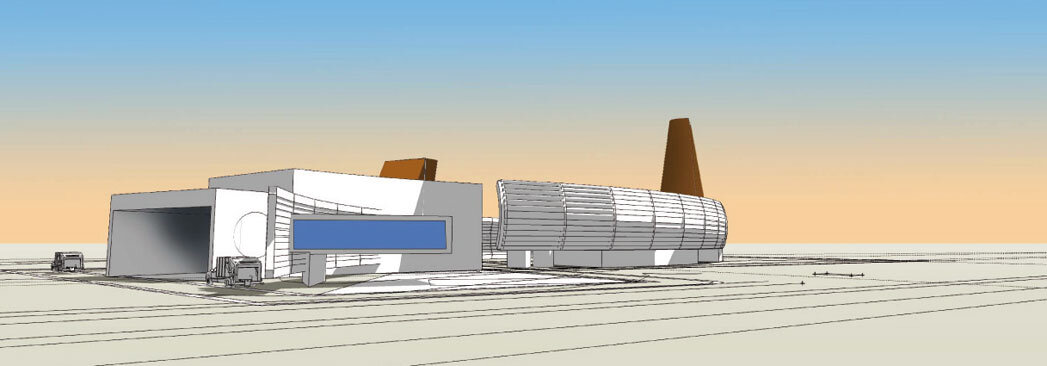
Phase I — Proven Technology, Integrated for Kurzeme
The first phase, with a planned investment of approximately €80 million, will establish an integrated circular-economy plant in Kurzeme, Latvia. The facility will combine advanced waste sorting and recycling with hydrogen-rich gas and biochar production, glass-fibre recovery, and the dry processing of peas into protein, fibre and starch concentrates.
The plant is designed to be largely energy self-sufficient and to achieve a carbon-negative balance. It will transform regional resources and residual materials into valuable products while establishing the commercial and operational platform for future Global Gateways plants.
Technology Already Proven in Operation
Global Gateways’ patented alternative-protein technology is already operating at GroPro’s facility in Bjuv, Sweden, where peas and other biological feedstocks are processed into valuable protein, fibre and starch fractions. The dry process uses the complete seed, avoids harsh chemical extraction and significantly reduces energy and water requirements compared with conventional wet-processing methods.
The waste-sorting section builds on state-of-the-art technology already proven at the ROAF facility near Oslo, Norway. Constructed by STADLER and equipped with TOMRA optical sorting systems, the fully automated plant has operated since 2014 and processes approximately 40 tonnes of municipal waste per hour. It achieves high recovery rates for biowaste, paper, metals and multiple plastic fractions.
Gasification itself has more than a century of industrial operating history. Global Gateways builds on this established technology through its patented process improvements, gas cleaning, controls and integrated plant design. The value of Phase I lies in combining proven industrial systems through Global Gateways’ proprietary patents and engineering into one efficient, commercially scalable and carbon-negative platform.
Biochar — Supporting Farmers and Restoring Soil
Phase I will produce biochar from qualified clean biogenic feedstocks. Biochar can help farmers retain water and nutrients in the soil, save on Fertilizers, improve soil structure and biological activity, reduce nutrient losses and support more resilient crop production.
By retaining carbon in a stable form, biochar combines long-term climate value with practical agricultural benefits. It can also help reduce dependence on fossil-fuel-based fertilisers and support the restoration of degraded or less productive soils and land areas.
Learn more about biochar and Global Gateways soil enhancers.
Industrial Experience and Long-Term Backing
Global Gateways has been supported over many years by senior figures from the international energy, industrial and scientific sectors, including former CEO’s from Esso Europe, Yara International and a global leader from BP research and development.
This history brings experience in global energy, industrial development, scientific research, technology and long-term investment to the Kurzeme programme.
Read about Global Gateways’ investor history.
Phase II — Full-Scale Expansion
Following the successful development of Phase I, the Kurzeme project is planned to expand into a full-scale circular-economy complex with capital expenditure above €4 billion.
The full-size plant is designed to process more than one million tonnes of waste annually, including municipal solid waste, industrial residues, selected plastics and other materials that are difficult to recycle through conventional systems.
The facility will recover and sell recyclable materials, recycle glass fibre to a quality suitable for industrial reuse, produce alternative-protein ingredients and convert qualified residual materials into hydrogen-rich gas, electricity, industrial heat and biochar.
The plant is designed to generate approximately 273 MW of electricity for the national grid and more than 200 MW of thermal energy for local industrial use. The combination of material recovery, energy production and biochar storage is intended to reduce waste-treatment costs, improve resource efficiency and achieve a carbon-negative balance.
The full-size plant will bring together state-of-the-art sorting, Global Gateways’ patented refinery and gasification processes, and proven combined-cycle power-generation technology. Its modular design will allow the plant to operate efficiently while maintaining redundancy, flexibility and long-term performance.