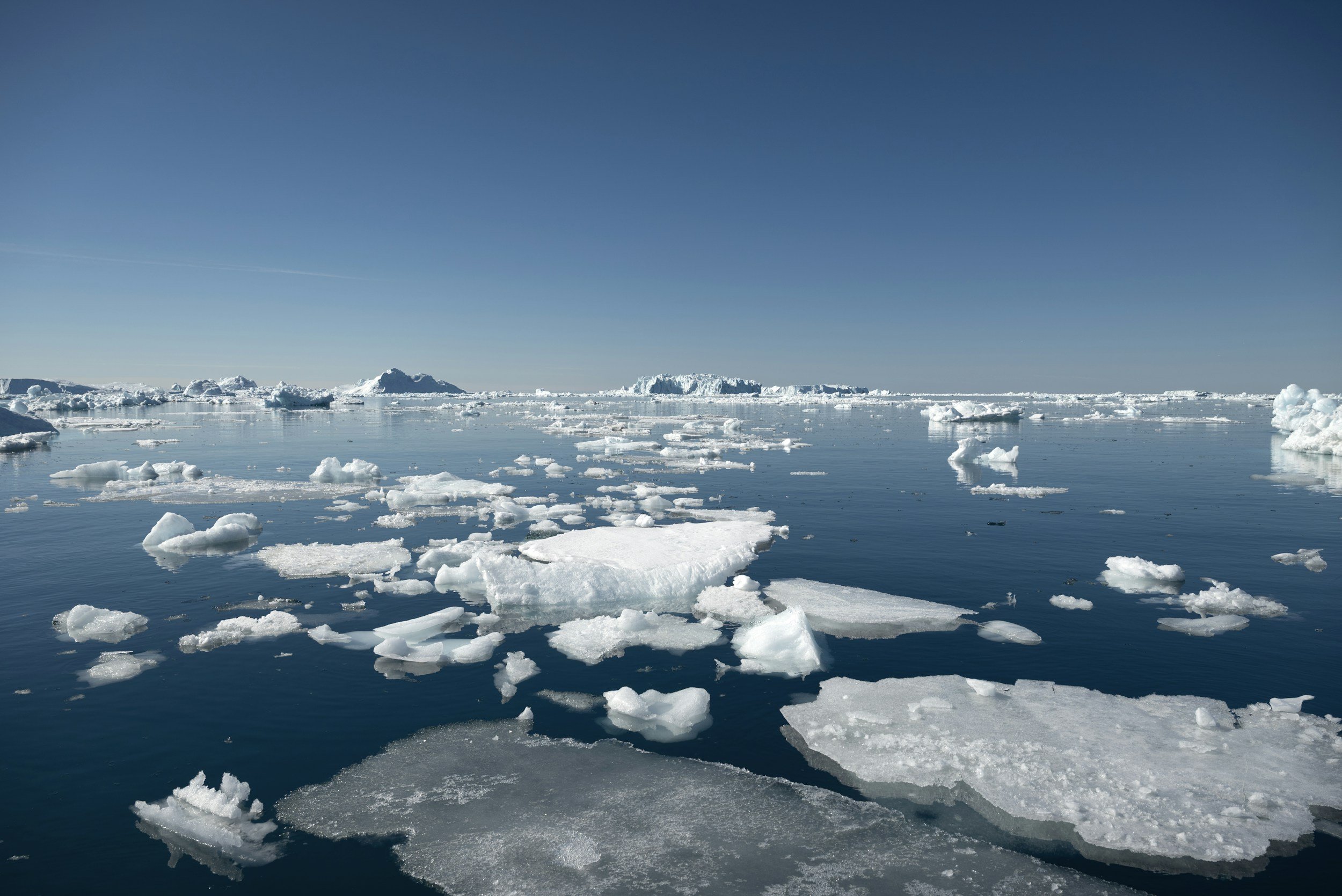
Why should you care about climate change?
If you have children or grandchildren the answer is simple, the longer we wait, the more expensive it becomes for our future generations. They will be asking us
“what were we thinking?”
The problem is that we already know that climate change is not a distant future threat. It is happening already - and accelerating. Yet our present efforts are far from acceptable.
Global temperatures over the last 25 years have been above the 20thcentury average. Formerly one-off extreme weather events seem to be becoming the new normal. This is in line with what scientists for the last 30 years have been projecting how a world undergoing global warming will be like.
The consequences of climate change are being felt across the world:
Record droughts in Africa, the US and elsewhere over the past few years have helped push up global food prices;
Summer Arctic ice has reached a record low and virtually all glaciers worldwide are retreating;
Historic flooding in Asia has destroyed the homes and livelihoods of millions of people.
Storms are becoming more frequent and intense as seen in Hurricane Sandy or the more recent Typhoon in the Philippines and Japan.
Europe witnessed several record-breaking cold snaps and heat waves in recent years, which caused tens of thousands of premature deaths;
River and coastal flooding affects millions of people in Europe every year; and will only get worse
International organisations like the World Bank, the Food and Agriculture Organisation or the United Nations Environment Programme have all warned of the destructive effects of global warming on people's livelihoods and the economy.
TICK TOCK OUR TIME IS RUNNING OUT
The World Meteorological Organization’s State of the Global Climate 2025 confirms that 2015–2025 were the eleven hottest years on record, Earth’s energy imbalance is at its highest in the 65-year record, and recent annual warming is now around the 1.5°C threshold. WMO confirmed 2024 at about 1.55°C above the 1850–1900 average, while 2025 remained one of the hottest years on record at about 1.43°C. The video below gives an updated scientific overview of the accelerating climate emergency.
Scientists say that to prevent climate change from spiralling out of control, global warming must be kept below 2°C compared to the temperature in pre-industrial times. But if current trends continue, the world is set for a temperature increase of more than 3°C, with all the devastating effects that will go with it.
Climate change is caused by greenhouse gas emissions – mainly from human activity. Burning fossil fuels is responsible for three quarters of global emissions. Deforestation is also a large contributor.
DW News — “Why Europe could deep freeze in a warming world”
This requires 50 Gigaton of carbon negative, we are not talking about carbon neutral or slightly positive emissions, to do this number in a different way, its more than 50 billion tons carbon negative, yearly, by 2050 the latest, globally. Or there is a 50% chance that we will pass a climate catastrophe tipping point.
Studies show this is neither easily feasible or easily affordable, but it requires us to make the transition to a low-carbon society sooner rather than later. The longer we wait, the more expensive it becomes.
At the end of the day the entire economy depends on a healthy environment. Our governments are failing us and we are failing ourselves by accepting business as usual, it will come out of own pockets, the time to act is now.
Now ask yourselves what kind of legacy do you want to leave your children?
DW News — “Why Europe could deep freeze in a warming world”
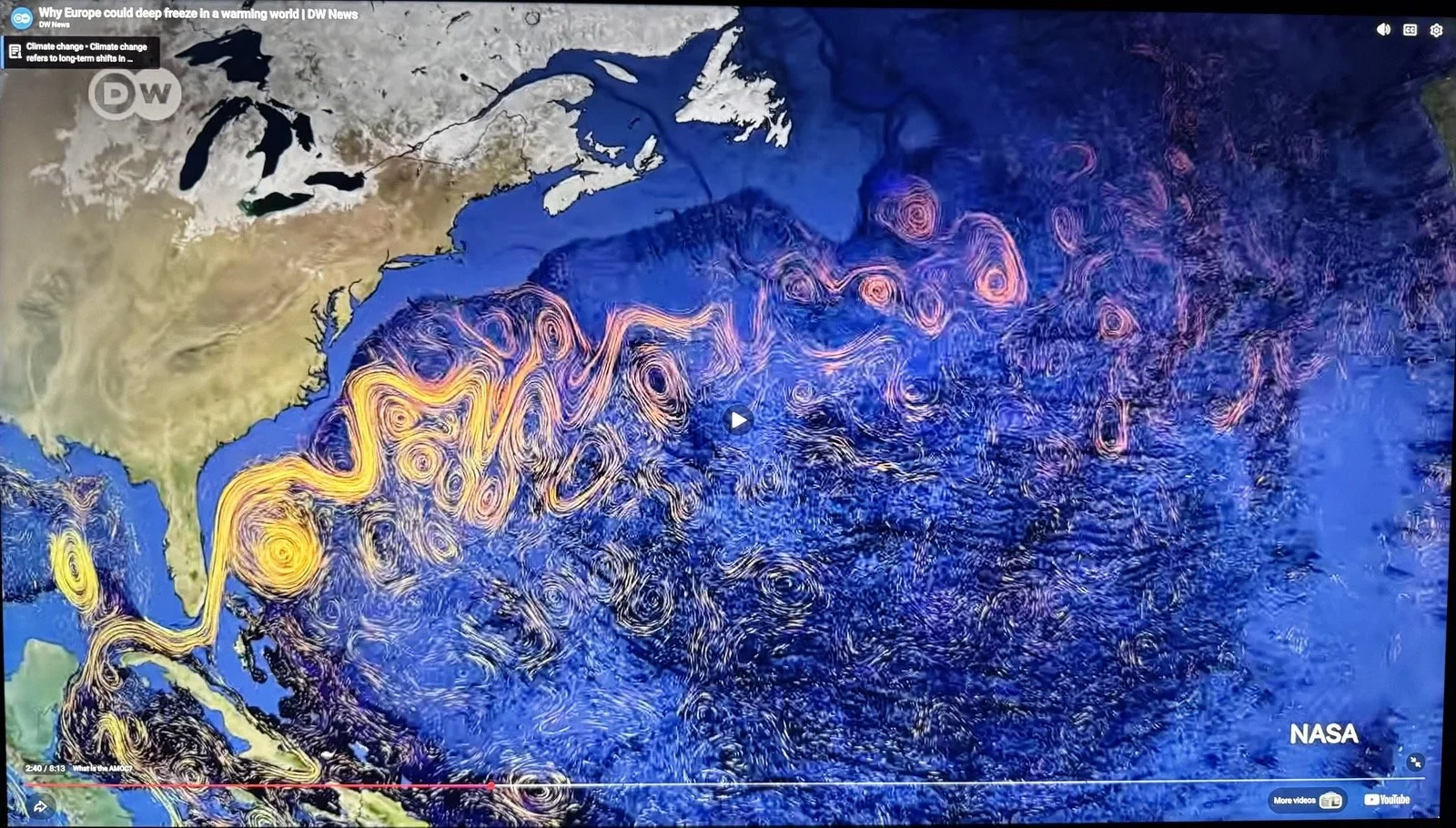
The Atlantic Meridional Overturning Circulation, or AMOC, is one of the major climate systems regulating Europe, the North Atlantic and global rainfall patterns. More recent research no longer supports treating AMOC collapse only as a distant post-2100 risk.
A 2023 Nature Communications study estimated a possible AMOC transition window of 2037–2109, The collapse time is estimated between 2037-2064 (10-90% CI) with a mean of 2050 and the probability of an AMOC collapse before the year 2050 is estimated to be 59 +/- 17%. These are risk estimates, not certainties, but they show why AMOC collapse must now be treated as a serious near-term climate-security risk.
A collapse or severe weakening of AMOC could disrupt European winters, agriculture, fisheries, rainfall patterns, sea level, energy security and food systems. The video below explains why this is now considered one of the most serious climate tipping-point risks.
Our Story
Every decision we make is shaped by a clear sense of purpose. Our journey has been anything but ordinary. Through every step, we've focused on staying true to our values and making space for thoughtful, lasting work.
What began as a passion project has evolved into something more. We’re proud of where we’ve been and even more excited for what’s ahead.
in context of the reason why this company exist. James Hansen warned in Storms of My Grandchildren that climate change would not be a distant problem, but a direct inheritance imposed on the next generations. That warning is now being overtaken by present reality: Hansen’s more recent work argues that global warming has accelerated since 2010, with rising Earth energy imbalance, aerosol-unmasking effects and increasing risk of faster ice-sheet and ocean-system disruption.